
On this page
TL:DR If you’re a State Bar of Georgia member experiencing stress, depression, substance use concerns, or workplace conflict, or if you want to build resilience before those issues emerge, the Bar has built resources specifically for you.
No time to read? Listen to a conversation about this blog post instead.
The legal profession demands precision, constant availability, and unwavering advocacy for clients facing life-altering situations. These demands produce excellent legal work—and predictable mental health consequences that affect lawyers at rates significantly higher than the general population.
If you’re a State Bar of Georgia member experiencing stress, depression, substance use concerns, or workplace conflict, or if you want to build resilience before those issues emerge, the Bar has built resources specifically for you. Georgia now offers a two-tier system: immediate clinical support through the Lawyer Assistance Program and long-term wellness infrastructure through the Center for Lawyer Wellbeing.
Here’s what Georgia lawyers need to know about why these challenges emerge, what’s at stake, and how to access the right support at the right time.
When Excellence Comes at a Cost: The Problem
Lawyers face mental health and substance use challenges at rates that stand out even among high-stress professions. Research consistently shows elevated rates of depression, anxiety, and alcohol use disorders compared to the general population.
This isn’t about individual weakness or poor coping skills. The pattern appears across practice areas, firm sizes, and career stages. Solo practitioners face different pressures than Big Law associates, but both groups show elevated risk. Family law attorneys absorb different trauma than criminal defense lawyers, but both experience vicarious stress that accumulates over time.
The profession attracts high-achieving, conscientious people who are trained to anticipate problems and advocate forcefully. Those same traits that make someone effective in a courtroom can intensify the psychological toll when those skills turn inward during personal struggles.
What’s Causing It
Several structural elements of legal practice create sustained pressure that accumulates regardless of individual coping ability.
Billable hour requirements create constant productivity pressure. Most lawyers track time in six-minute increments, which means the workday never truly ends. A dinner conversation or weekend thought about a case feels like lost revenue. This economic structure makes rest feel like professional failure.
The adversarial nature of legal work places lawyers in conflict by design. Even transactional work involves opposing interests and high-stakes negotiations. Your professional life is structured around disagreement and criticism—that dynamic takes a psychological toll regardless of whether you win or lose.
Client problems become your problems through sustained exposure. Lawyers absorb their clients’ stress during divorces, custody battles, criminal charges, and business disputes. You’re trained to remain objective, but sustained exposure to others’ worst moments creates vicarious trauma that conventional boundaries don’t fully prevent.
Error intolerance and perfectionism are baked into professional standards. A missed deadline or overlooked precedent can have devastating consequences for clients. This creates a psychological environment where small mistakes feel catastrophic, which drives anxiety that never fully shuts off.
Confidentiality requirements limit where you can seek support. You can’t discuss case specifics with friends or family, which means the very problems causing stress become things you must handle alone. This professional isolation compounds the difficulty of seeking help.
The profession’s culture historically penalized help-seeking behavior, treating mental health struggles as character flaws rather than occupational hazards. That stigma has decreased but hasn’t disappeared, which means lawyers often wait until problems become crises before reaching out.
Why It Matters
The consequences of unaddressed mental health challenges move outward in concentric circles, affecting the individual lawyer, their clients, and the profession itself.
Personal wellbeing declines in measurable ways. Untreated depression, anxiety, or substance use disorders damage relationships, physical health, and quality of life. What begins as manageable stress can progress to clinical conditions requiring intervention.
Professional performance degrades in ways that affect daily work quality. Cognitive function, decision-making, attention to detail, and client communication all suffer when lawyers are struggling mentally. A lawyer operating at seventy percent capacity because of depression isn’t providing the advocacy their clients need.
Client service quality becomes inconsistent. Missed deadlines, overlooked details, poor judgment calls, and inadequate communication damage clients who depend on competent representation. The lawyer who can’t manage their own wellbeing struggles to manage client matters effectively.
Career longevity and satisfaction decline. Lawyers leave the profession at higher rates when they can’t access appropriate support. The investment in legal education becomes a sunk cost when talented attorneys burn out because structural problems were treated as personal failures.
The profession’s reputation suffers when wellbeing isn’t prioritized. Public trust in lawyers depends partly on the perception that attorneys are capable, stable professionals. High-profile incidents involving lawyers in crisis damage that trust and make recruitment harder.
What Georgia Lawyers Can Do Now
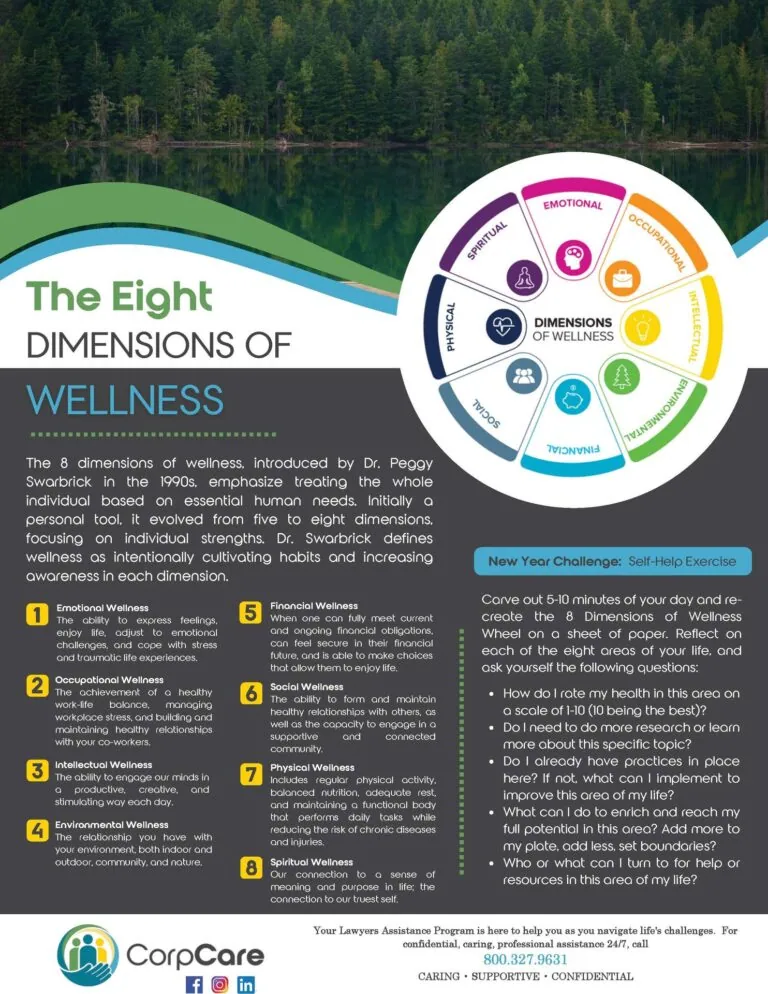
The State Bar of Georgia has built a two-tier system to address both immediate clinical needs and long-term preventive wellness. Here’s how to determine which resource fits your situation.
The Lawyer Assistance Program: Clinical Support When You Need It
The LAP provides immediate access to confidential clinical counseling for acute mental health concerns, substance use issues, family problems, or workplace conflicts. This is not peer support—you’re working with fully licensed mental health professionals who understand the unique pressures lawyers face.
Don’t forget that all Georgia attorneys receive six prepaid counseling sessions per calendar year (#UseYour6). Call 1-800-327-9631 today to schedule a session with a licensed, clinical counselor.
Sessions happen near your office or home through the Bar’s partnership with CorpCare Associates, a Georgia-headquartered national counseling agency with providers throughout the state. There is no cost to State Bar members, the Bar funds this program as a member benefit, which means you’re not paying out of pocket or submitting insurance claims.
Confidentiality is built into the program structure through independent third-party administration. Your use of the LAP isn’t reported to the Bar. Conversations with counselors are protected by standard clinical confidentiality rules.
The program addresses a broad range of issues beyond mental health diagnoses; depression and anxiety are covered, but so are substance use concerns, family problems, workplace conflicts, grief, career transitions, and stress management. If something is affecting your ability to function personally or professionally, it falls within the LAP’s scope.
For more information, visit www.gabar.org/bar-communities/lawyer-well-being.
The Center for Lawyer Wellbeing: Building Long-Term Resilience
The Center for Lawyer Wellbeing was created in 2024 to provide proactive wellness infrastructure for legal professionals. While the LAP addresses acute clinical needs, the Center focuses on prevention, education, professional development, and community building around wellness as a core component of lawyer competency.
Annual membership costs forty dollars for lawyers and is free for law school students. That investment provides tangible benefits for lawyers at any career stage.
Members receive discounts on continuing education and professional development programming, discounts on wellness products and services, priority access to wellness events and programs, and exclusive access to premium wellness resources. The Center provides networking opportunities with wellness experts and peers, which creates community around wellness and normalizes help-seeking behavior. Members also get exclusive member-only events, perks, recognition, and rewards.

Confidentiality is built into the program structure
Beyond individual benefits, the Center serves several institutional functions. It collaborates with Bar sections and committees to provide high-quality programming that educates lawyers, judges, and law students on wellbeing issues. It functions as a clearinghouse of information on the State Bar’s wellbeing work across sections, committees, and divisions.
The Center encourages continued study of the connection between wellbeing, professionalism, and discipline. It develops and shares policies and best practices that move the profession toward healthier behaviors, and works to eliminate the stigma associated with help, seeking by normalizing wellness as a professional competency rather than a personal weakness.
To join the Center, contact the Membership Department at membership@gabar.org.
When to Use Each Resource
Use the LAP when you’re experiencing acute distress, crisis, or clinical symptoms interfering with your ability to function. This includes depression, anxiety, substance use concerns, family emergencies, grief, workplace conflicts that have escalated, or any situation where you need immediate professional clinical support. The LAP is designed for situations where you need help now.
Join the Center when you want to build resilience proactively, connect with peers around wellness topics, access educational programming, or engage with the profession’s broader conversation about lawyer wellbeing. The Center works best for lawyers who want to invest in prevention rather than waiting for problems to emerge.
Use both when you’re managing an acute issue through the LAP and want to build longer-term resilience through Center programming. Many lawyers find that clinical support helps them stabilize during a crisis, while Center membership helps them develop sustainable practices that prevent future crises. The two resources complement each other.
Taking the First Step
The hardest part of accessing support is often deciding to reach out. The LAP and Center exist because the Bar recognizes these pressures are structural, not personal failures. Using these resources is a professional decision to maintain your capacity to serve clients effectively and sustain a long legal career.
If you’re in crisis or experiencing symptoms that are interfering with daily functioning, remember: #UseYour6. Call the LAP confidential hotline at 1-800-327-9631. The six sessions can provide immediate relief, help you develop better coping strategies, or connect you with longer-term resources.
If you want to invest in prevention, professional development around wellness, or connection with peers who are prioritizing wellbeing, join the Center for Lawyer Wellbeing for forty dollars per year at membership@gabar.org. The programming, resources, and community make membership valuable regardless of whether you’re currently struggling or simply want to build resilience.
Georgia lawyers have access to these resources because the profession understands what it asks of its practitioners. The expectation is that you’ll use them when you need them, just as you’d use any other professional tool designed to help you do your job well while sustaining a long career.